Creative Director · Brand platforms · Creative systems
Stop creative confusion from costing you cash and clients.
Ponders clarifies creative, so your teams can align, brand, & create.
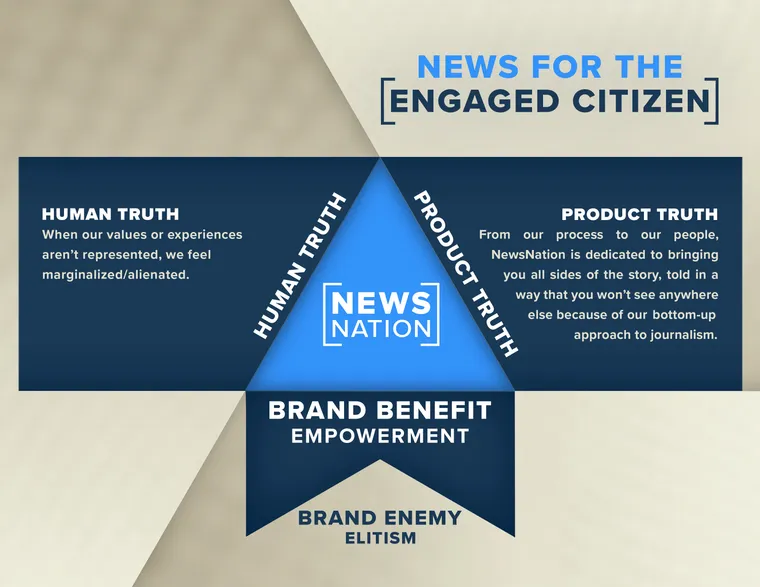
I spearheaded NewsNation's rebrand in-house, after the network set aside an outside agency's paid proposal, and carried it across eight show brands. Then I built RecLet's brand from zero.
Every creative decision is a story decision.
What I believe
I believe story is the most powerful force we have. It doesn't just describe our reality; it builds it. The stories we tell each other, and the ones we tell ourselves, decide the choices we make and the actions we take.
Think of it as the butterfly effect, for story. Someone tells a story on one side of the world. Someone hears it and passes it on. Someone on the other side reads it, and their life opens in a direction it wasn't going before. It happens to every one of us, every day: we take in thousands of messages, and every one of them uses story to reach the people it's meant for. That's why a storyteller has to choose every word with care.
Most businesses know story is powerful. Where many go wrong is in whose story they tell. The story that works is the audience's: when a brand makes its audience the main character, it becomes obvious who it's for, and the people already looking for the answer find it.
How I work
Story theory, then the system that ships it.
Story Theory
Read the story first: what a brand promises, which line of copy earns the click, which segment opens the show, even the palette, because a product built to calm someone cannot be red.
System
Then build the thing the team ships through: templates, standards, onboarding, review gates, and the documentation that makes them stick.
It worked for a design group of ten at a news network, for producers across the US, UK, and India, and in 2026 for a team of AI coding agents working out of CLARK, the private knowledge base I built so the studio's own material never leaves the drive.
How the method works →AI in the workflow
New tools, same bar.
CLARK, a private knowledge base I built: offline on local models, 117,000 files in 23 role-scoped workspaces, with written rules for what it may never read.
A library of 67 agents, 75 skills and 84 rules covering QA, security review, accessibility, store compliance and brand voice.
On RecLet I set the briefs, the standards and the review gates, and made every creative decision; AI coding agents did the implementation. The product itself promises that no AI ever reads a writer's work.
Selected work
Five bodies of work, one method.
RecLet
- Problem
- Creative tools have started claiming the work: cloud suites hold the file, meter the features, and run AI over the content.
- Insight
- AI output is only as trustworthy as the standards and review around it, and building those is leadership work, not engineering work.
- Result
- Built to store-ready in six months: 520 merged pull requests, 4,100+ unit tests, and every word of copy owned.
Epsilon
- Problem
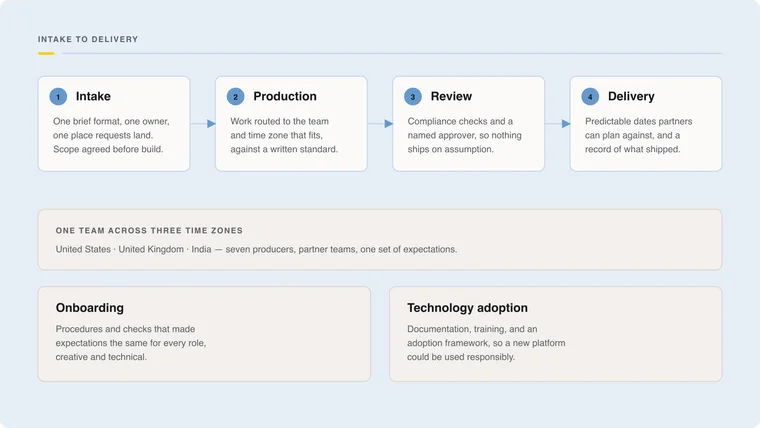
- Seven producers, each carrying 20 to 40 client brands, with teams across the US, India and LATAM, and delays that made delivery hard to plan.
- Insight
- Give every brand the same path: one route from intake to delivery, whichever team picks it up.
- Result
- Clients got dates that held, and I took a new service line, Spaceback, from client request to priced and pitched.
NewsNation
- Problem
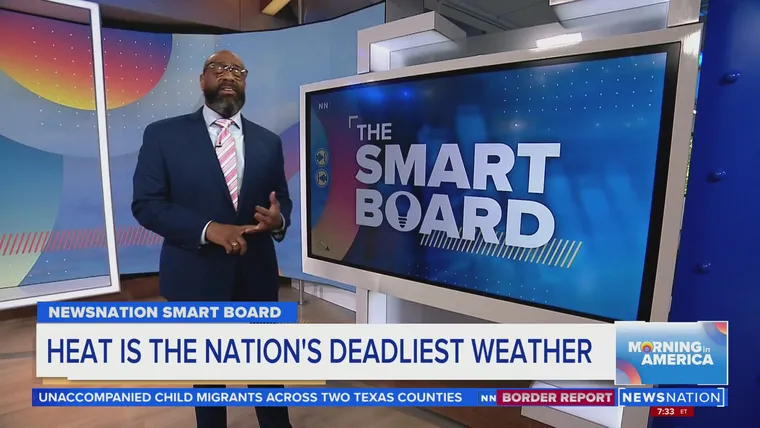
- A cable channel with one three-hour newscast had to become a national news network, during a pandemic, while its design team was still forming.
- Insight
- Brand every show from one idea, and turn routine graphics into templates producers can build themselves.
- Result
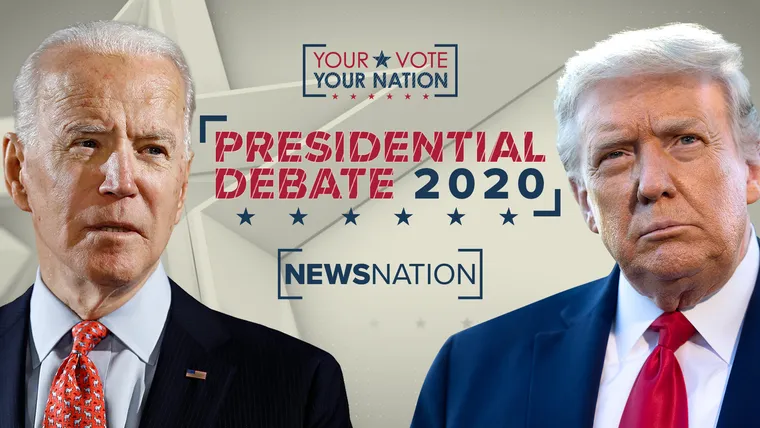
- Producers built routine graphics themselves, so the design desk could keep branding new shows: eight show brands, debate and election packages inside 60 days, and three of the ten moved into supervisory roles.
WGN-TV
- Problem
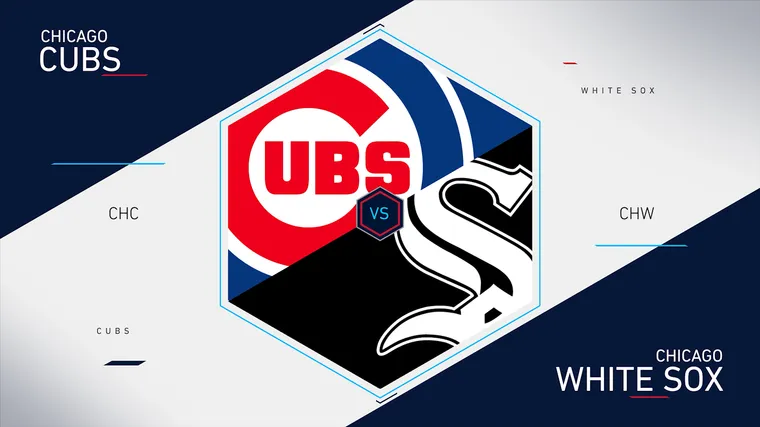
- Six hours of live morning television a day, plus trivia lower thirds for two national networks.
- Insight
- Find the repetition that eats a team's creative hours, and build the system that takes it off their plate.
- Result
- About 900 trivia animations a quarter with nobody keying them by hand: the first version of an approach I later built at NewsNation and Epsilon.
Man of the People
- Problem
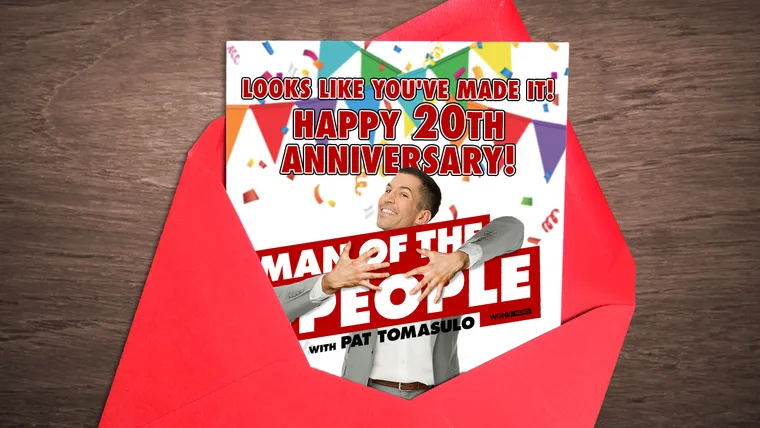
- A weekly comedy show where every joke needs a picture by Friday.
- Insight
- A joke lands in a second, so the picture has to as well: set one visual language for the show, then template it so it holds at speed.
- Result
- The show's animation package and about 80 graphics a week for two seasons, 4,000+ delivered; season one ranked #2 in Adults 25–54 among regularly scheduled Saturday late-night shows.
What people say
From the people I managed
Across two teams I managed eighteen people, junior to senior. At NewsNation, three of the ten moved into supervisory roles.
“I'm so grateful for the time we did share, one-on-one mentorship, and team leadership.”
 Tahira M., Digital Production, Epsilon
“Having [Adam] as a manager was a pleasure and I always felt fully supported with whatever I could have needed, it made the job so much easier.”
Bridget A., Digital Production, Epsilon“[Adam] was a great manager and I learned so much from [his] guidance … lessons I'll carry with me for a long time.”
Brenda A., Digital Production, EpsilonFrom the people I worked alongside
“Adam became such a valued part of our design team. Adaptable, technically skilled, and an incredible problem solver. I couldn't imagine managing a national news design team during a pandemic without Adam.”
 NaShantá Fletcher, NewsNation / WGN-TV
“Adam's attention to detail, speed under pressure, and technical mastery made him one of my go-to designers. He consistently delivered thousands of assets with accuracy and a positive attitude.”
 Bernard Ong, former Art Director, WGN-TV
Creative confusion is expensive.
I've fixed it before.
Open to Creative Director, Brand Director, Creative Operations, and Product Marketing leadership roles at media and marketing organizations with distributed creative teams. Remote anywhere in the US or hybrid in or near Los Angeles.
Or email adam@ponders.now. Intro calls are 20 minutes by video. The booking form asks for your company, the role, and a work email.